
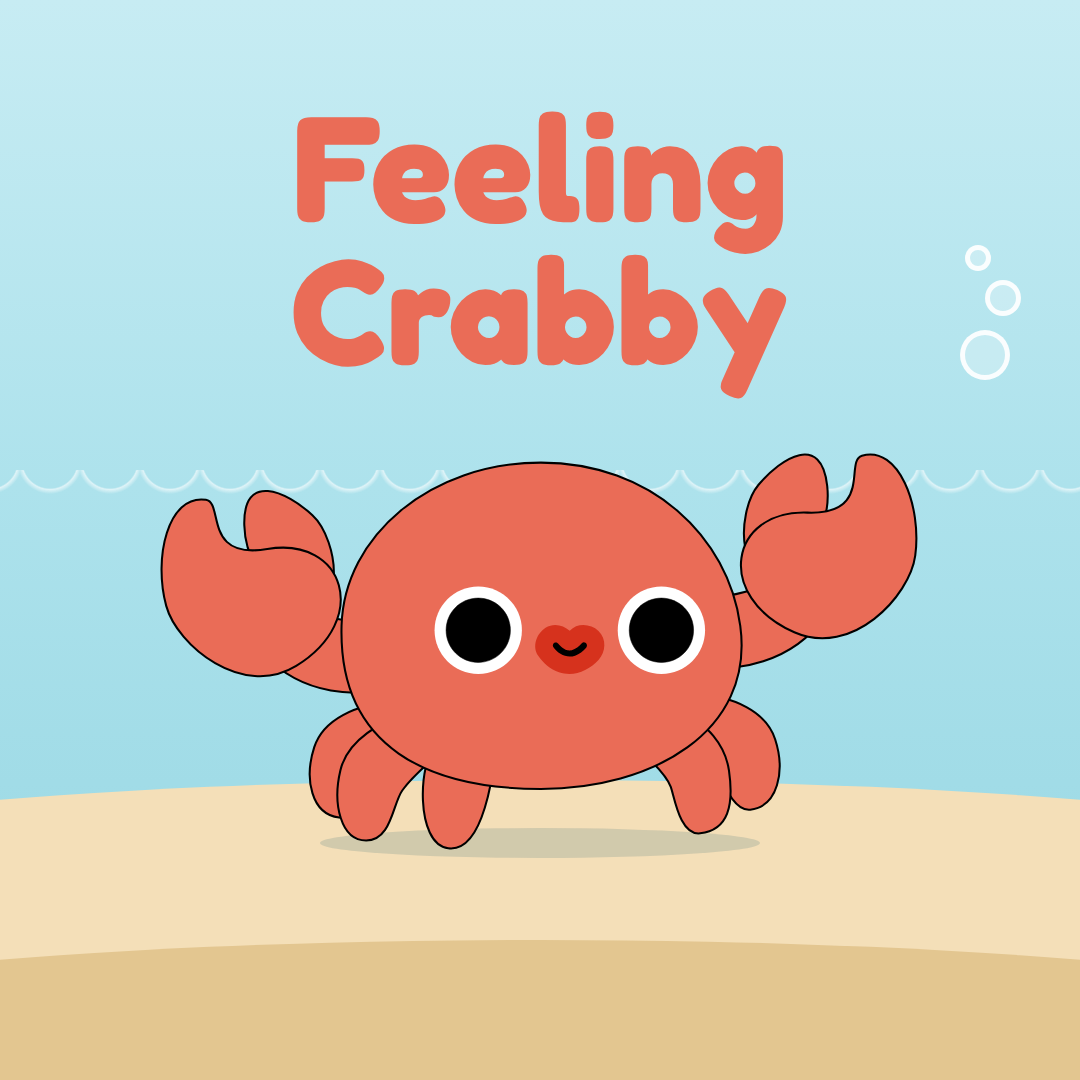
Feeling Crabby is an interactive reflection tool in which children and families explore big feelings through the science of crabs. It is guided by Crabby, an original crab character. Crabby’s claws pop up when something feels hard, and the tool reframes “being crabby” as a signal of needing safety rather than a sign of being mean. The digital experience is paired with a hands-on craft, so reflection continues off the screen and into making and storytelling.
Learning Goals
Emotional awareness: Feelings are noticed and rated through a playful “Claw-o-meter,” so intensity can be named without needing exact words
Looking beneath the surface: Children are invited to consider what might be “under the shell” (tiredness, hunger, noise, worry, feeling left out, missing someone, or something new) as the cause behind a crabby moment
Coping strategies: Six “crab moves” are offered as calming or expressive strategies: taking a break, resting somewhere cozy, slow breathing, tucking in for comfort, telling someone, and creating something
Growth mindset: Molting is used as a metaphor for growth, and feeling tender is presented as a normal part of growing
Science literacy: Every coping strategy is paired with a real, simplified crab fact, so curiosity about the natural world is built alongside emotional skills
Family conversation: A “Talk together” prompt and a shared story activity encourage grown-ups and children to reflect side by side
Creative expression: Reflection is extended through a recycled-materials craft and a mad-lib story, so each child leaves with something they made and named
Feeling Crabby: Information Architecture
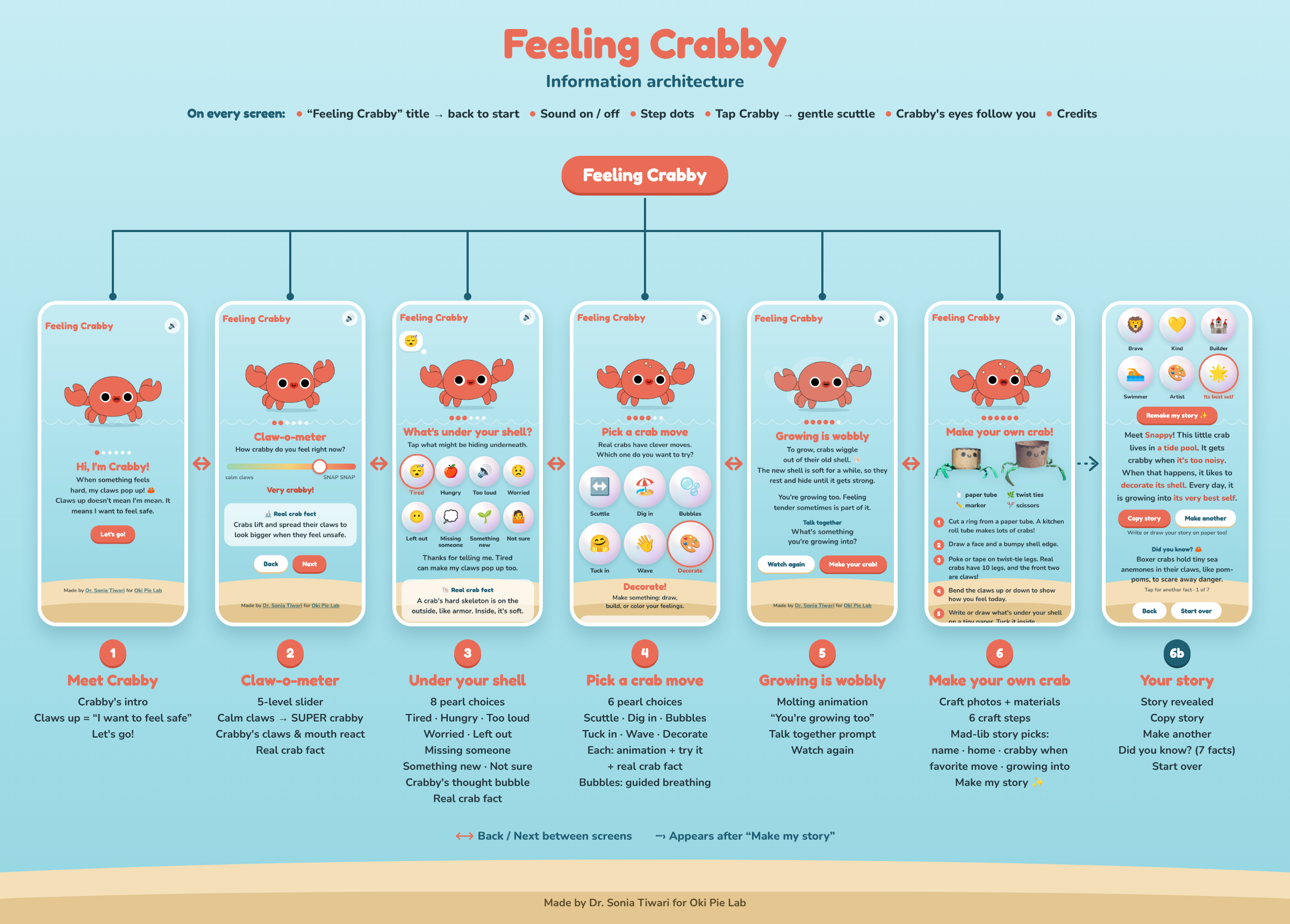
The structure of Feeling Crabby is mapped across six main screens, shown in the order they are experienced
1 Meet Crabby: Crabby is introduced and “claws up” is reframed as wanting to feel safe
2 Claw-o-meter: Feelings are rated on a five-level slider
3 Under your shell: What might be behind a crabby moment is explored
4 Pick a crab move: A coping strategy is chosen and acted out by Crabby
5 Growing is wobbly: Growth is reflected on through molting
6 Make your own crab: The experience is carried off the screen through a craft and story picks
6b Your story: A mad-lib story is revealed after “Make my story” is tapped
The title link, sound toggle, step dots and interactive Crabby are available on every screen, and Back and Next connect each step
Science Grounding
Crab behaviors were selected because they map naturally onto feelings and coping, and each was checked for scientific accuracy and simplified for young audiences:
Crabs raise and spread their claws to look bigger when they feel unsafe
A crab’s skeleton is on the outside, and its body is soft inside
Most crabs walk sideways because of how their legs bend
Many crabs dig into sand to rest and stay safe
Box crabs fold their claws over their faces like a shield
Fiddler crabs wave one large claw to communicate
Decorator crabs attach seaweed and sponges to their shells as disguise
Crabs grow by molting, resting and hiding while the new shell hardens
Additional “Did you know?” facts are offered at the end to spark further curiosity.
The Experience
Meet Crabby: Crabby is introduced, and the idea that “claws up” means wanting to feel safe is established
Claw-o-meter: A slider is used to show how crabby one feels, and Crabby’s claws rise, snap and wobble to match
What’s under your shell? A possible cause is chosen from a set of pearl buttons, and Crabby responds with acceptance
Pick a crab move: A coping strategy is chosen and acted out by Crabby, with a guided breathing exercise for the bubble move
Growing is wobbly: Crabby molts out of its old shell, and a family conversation prompt is shared
Make your own crab: Craft steps are shown, followed by a mad-lib story in which choices are made first and a short story is then revealed
Hands-On Extension
A crab is made from a cardboard tube ring and bread-bag twist ties. The legs can be bent, so the front claws become a physical claw-o-meter that can be reshaped as feelings change. A small note about what is “under the shell” can be tucked inside the ring, and the crab can be decorated like a decorator crab. The craft was designed for low-cost, recycled materials so it can be done at home or in live workshops.
Character and Interaction Design
Crabby was designed as an original character and is animated with gentle, purposeful motion: claws respond to feelings, eyes follow the cursor or finger, and Crabby blinks and talks by opening and closing its mouth
Tapping Crabby triggers a gentle sideways scuttle with swaying claws, rewarding curiosity without overstimulation
All choices are presented as round, pearl-like buttons to keep the visual language consistent and tactile
A single ocean-and-sand scene fills the screen, and the real crab facts are the only content placed in a card, so they stand out
Short sound cues are generated in the browser and can be switched off at any time
